
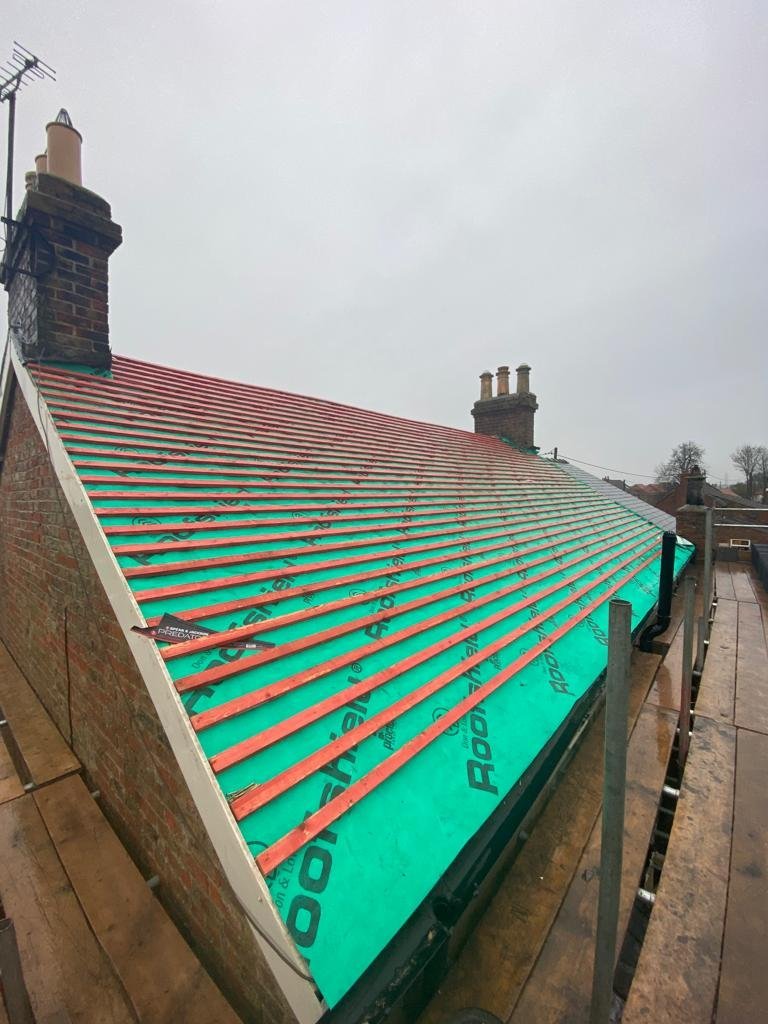
Roof condensation and loft damp
Roof and loft inspections to distinguish ventilation problems from rainwater entering the building.
Establish whether the moisture is internal or external.
Condensation forms when warm, moisture-laden air reaches a cold surface. Roof leaks bring water from outside. The marks can look similar, so ventilation, insulation, underlay and external roof defects all need to be considered.
Damp timbers or insulation
Mould and musty loft spaces
Checks for external roof leaks
Signs of roof-space condensation
Widespread droplets, mould across cold surfaces and moisture that worsens during cold weather can indicate condensation. Bathrooms, kitchens, drying clothes and unsealed loft hatches can increase moisture entering the roof space.
Roof ventilation and airflow
Eaves, ridge and tile ventilation can support airflow when correctly specified, but vents should form part of a coordinated roof and insulation design. Adding isolated vents without understanding the build-up may not solve the problem.
When damp is caused by a leak
Local staining below a chimney, valley, rooflight or displaced covering can point to rainwater entry. We inspect those external details and explain any roofing work required.
Common questions.
Why is the roof felt wet on the inside?+
It may be condensation where warm air meets the cold underlay, but a roof defect must also be ruled out. The pattern and weather conditions provide useful clues.
Will roof vents stop condensation?+
They can form part of the solution, but insulation, moisture sources and existing airflow also need to be assessed.
Can JDL Roofing check for a roof leak at the same time?+
Yes. We can inspect likely external entry points and the roof-space evidence where safe access is available.
Related roofing information.
Explore connected services and common roof issues before requesting a survey.