
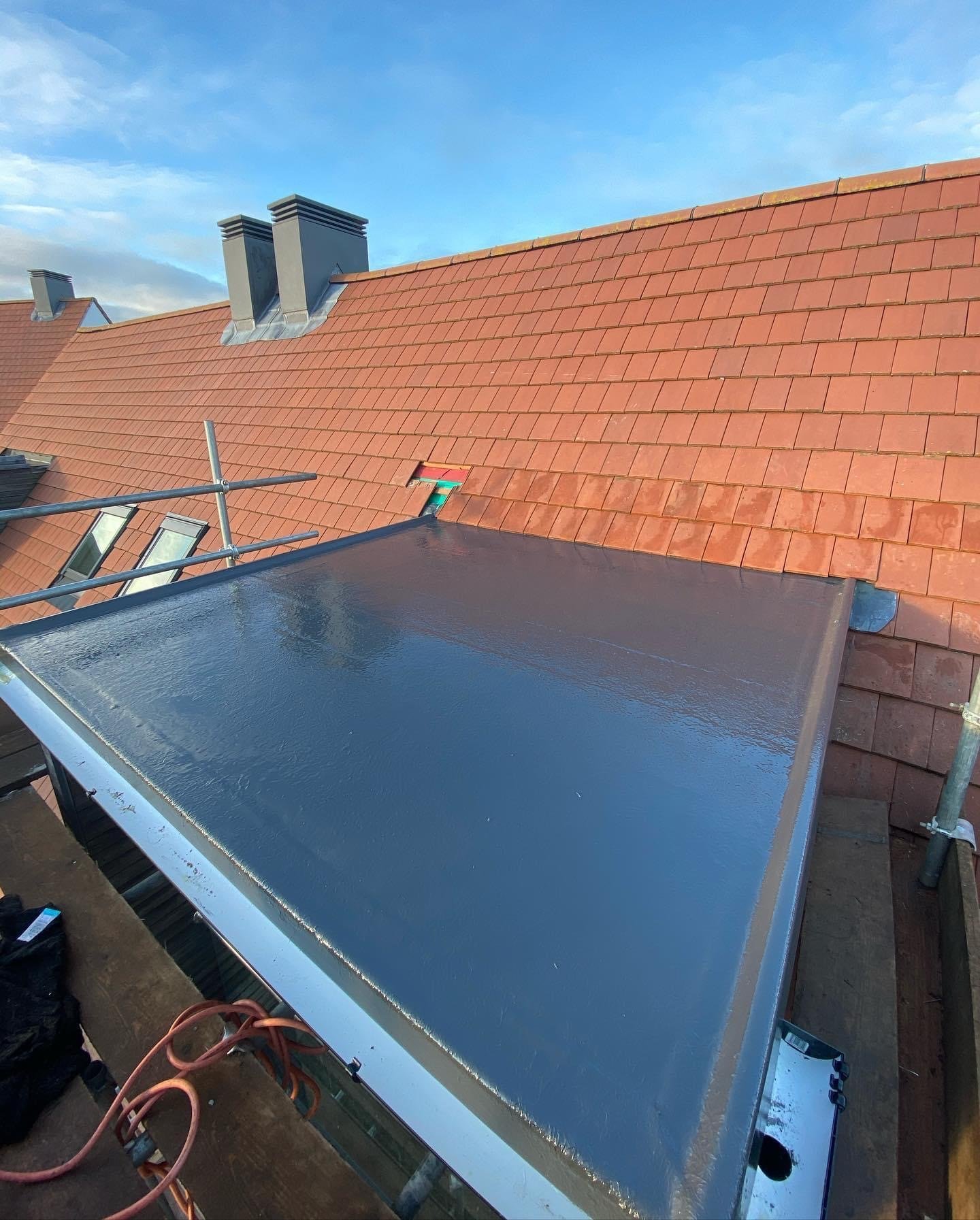
Keep outlets and drainage paths clear
Leaves, moss and debris can slow water discharge and increase standing water. Check accessible outlets from a safe position and arrange professional clearance where roof access is required.
Look at edges and junctions
Flat roofs commonly fail at wall upstands, edge trims, rooflights, pipes and outlets. Look for lifting, splits, open joints or staining on adjoining walls.
Take standing water seriously
Some temporary surface water can remain after rain, but persistent or deep ponding may indicate blocked drainage, inadequate falls or movement in the roof deck.
Do not damage the covering
Avoid unnecessary foot traffic and never place sharp or heavy items directly on the roof. If access is necessary, follow the system manufacturer's requirements and use competent contractors.
Questions about this guide.
How often should a flat roof be checked?
Frequency depends on the roof and surroundings. Regular planned checks and an additional look after severe weather are sensible.
Is standing water normal on a flat roof?
Small amounts may remain briefly, but water that persists can indicate a drainage or fall problem that should be assessed.