
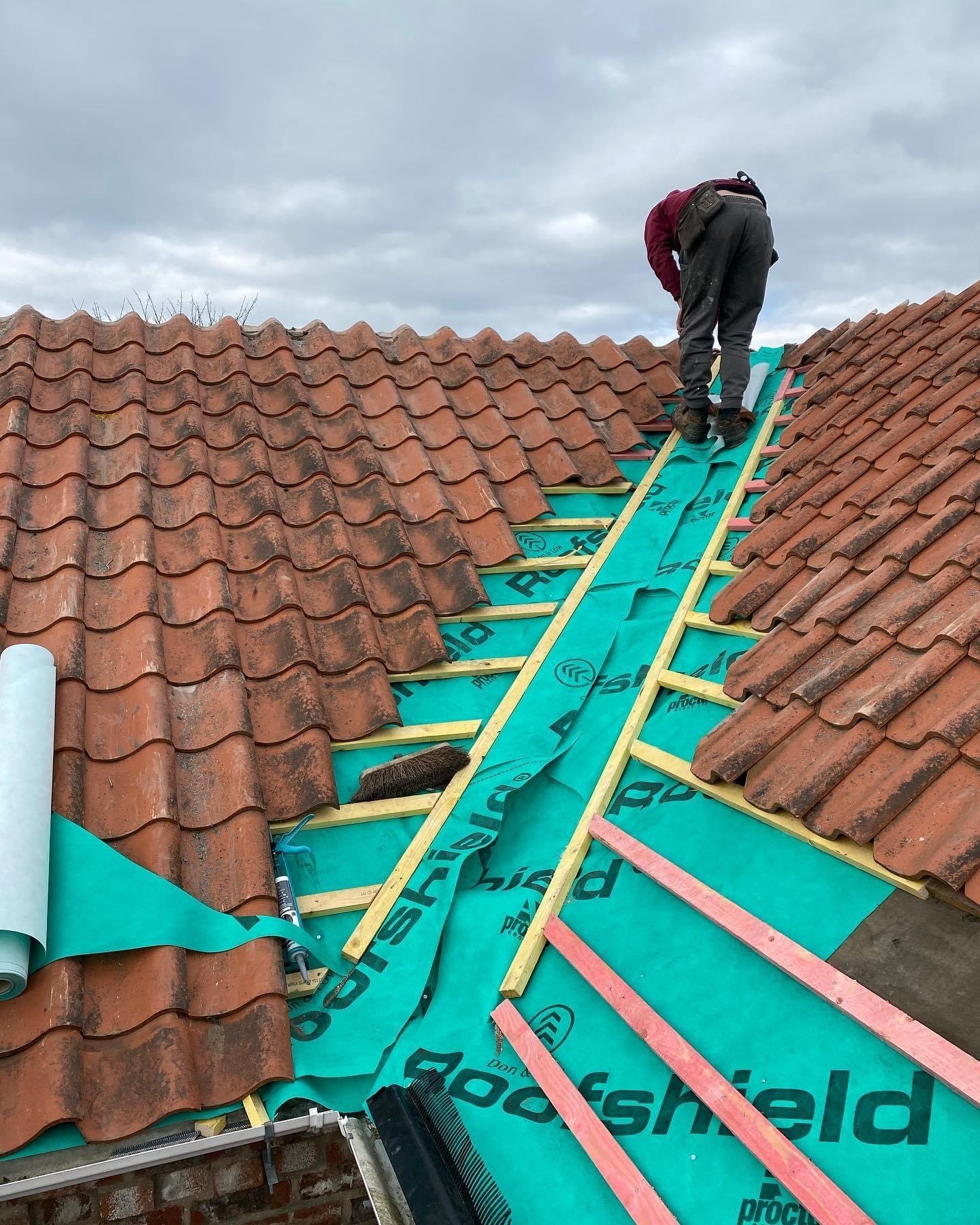
When a local repair is appropriate
A repair is usually the first consideration when damage is isolated, matching materials are available and the surrounding roof remains sound. Examples include one slipped tile, a defined flashing defect or a local flat-roof puncture.
When replacement becomes more practical
Widespread deterioration, repeated leaks, failed underlay or multiple previous repairs can make continued patching less reliable. Replacement also allows the covering, battens, underlay, ventilation and roof details to be considered together.
Compare scope, not just headline cost
Quotations should explain what is included, which materials will be used, how details are formed and what guarantee applies. A low-cost repair is poor value if the surrounding roof is likely to fail soon afterwards.
Use the survey to make a proportionate decision
A good recommendation should reflect the building and the evidence visible at survey. Ask what is known, what could remain hidden and how each option addresses the underlying condition.
Questions about this guide.
Is replacing a roof always better than repairing it?
No. Replacing a serviceable roof for one isolated fault would be disproportionate. The wider condition should support the decision.
Can a roof be replaced in sections?
Sometimes, depending on roof shape, junctions and material availability. The interfaces between old and new work must be designed carefully.